

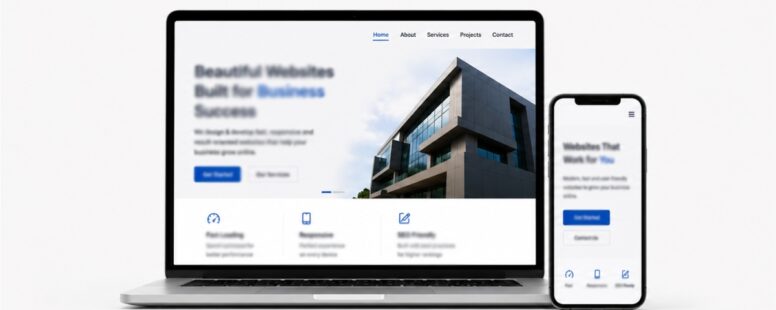
Why a Business Website Is More Than Just Design: Building for Visibility, Leads & Growth
Saudi Arabia’s Vision 2030 is accelerating digital transformation across industries, encouraging organisations to modernise operations, strengthen customer engagement, and compete in an increasingly technology-driven economy. As businesses invest in innovation and digital capabilities, a business website has become far more than a corporate showcase—it is a strategic business asset that influences visibility, credibility, customer acquisition, and long-term growth. For many decision-makers, a company’s website is the first indicator of its professionalism, expertise, and ability to deliver value.
Realising this potential requires more than an attractive interface. Effective business website design, supported by strategic website development, search optimisation, and a seamless user experience, creates a digital foundation that helps organisations attract qualified prospects, build trust, and convert interest into meaningful business opportunities. Businesses that align their digital presence with broader growth objectives are better positioned to capitalize on the opportunities created by Vision 2030 while strengthening their competitive advantage in Saudi Arabia’s evolving marketplace.
Challenges That Affect Website Performance
Many businesses continue to approach website projects as design initiatives rather than strategic business investments. Discussions often begin with colours, layouts, animations, or visual preferences, while far less attention is given to how the website will support visibility, customer acquisition, or measurable commercial objectives. Although these design elements contribute to brand perception, they represent only one part of a much larger system.
This challenge becomes more significant as customer behaviour continues to evolve. Decision-makers rarely rely on a single interaction before contacting a business. Instead, they research multiple providers, compare offerings, assess credibility, and evaluate how well a company communicates its expertise. In many cases, the business website becomes the first and most influential touchpoint in this evaluation process. If the website fails to provide clarity, accessibility, or confidence, potential opportunities may be lost before any conversation begins.
A common misconception is that business website design and business website development are separate priorities. In reality, they are interdependent disciplines. Design shapes user perception and experience, while development determines how efficiently the website performs across devices, browsers, and search engines. Without a strong technical foundation, even the most visually impressive interface may struggle to load quickly, function reliably, or achieve meaningful visibility.
Another challenge lies in treating website launch as the final milestone rather than the beginning of continuous improvement. Markets evolve, customer expectations change, and search engines regularly refine how they evaluate digital experiences. Organisations that fail to adapt their websites accordingly often experience declining visibility and reduced engagement over time. A strategic business website must therefore be viewed as an evolving business platform rather than a completed project.
The Strategic Value of a Business Website
A business website influences far more than online appearance. It shapes how an organisation is discovered, how its expertise is perceived, and how effectively it converts interest into meaningful business opportunities. Every interaction—from the speed at which pages load to the clarity of navigation and messaging—contributes to a visitor’s overall impression of the organisation.
Visibility is one of the most significant outcomes of a well-planned website. Even the strongest products or services generate limited commercial value if potential customers cannot easily find them. An SEO-friendly website is structured to improve discoverability while delivering an experience that satisfies both users and search engines. Logical architecture, well-organised content, technical optimisation, and intuitive navigation all contribute to stronger organic visibility over time.
Credibility is equally important. Before making enquiries or purchasing decisions, prospective customers often evaluate whether a business appears established, trustworthy, and capable of delivering results. A well-planned Corporate website communicates consistency, attention to detail, and organisational maturity. Conversely, outdated design, inconsistent messaging, or technical issues may create unnecessary doubts that influence purchasing decisions long before direct engagement occurs.
Beyond visibility and credibility, a website plays a central role in supporting sustainable business growth. Rather than functioning as an isolated marketing asset, it connects digital marketing initiatives, content strategies, customer engagement, and conversion activities into one integrated platform. A website for business growth enables organisations to attract qualified audiences, educate prospective customers, encourage meaningful interactions, and generate measurable outcomes. When supported by continuous optimisation, it becomes an increasingly valuable contributor to long-term commercial performance rather than a static digital presence.
A website performs best when it is integrated with the broader marketing strategy rather than operating as a standalone asset. Our Insight Why Many Digital Marketing Campaigns Fail in Saudi Arabia explores why disconnected campaigns often underperform and how strategy improves outcomes.
Building a Strategic Website: A Framework for Visibility, Leads & Sustainable Growth
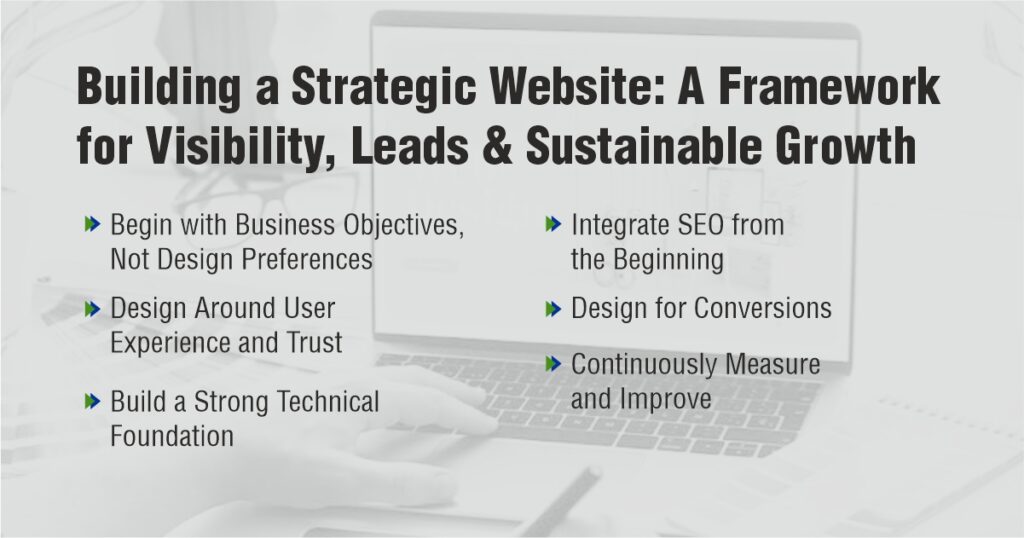
Creating a high-performing website requires more than combining attractive visuals with functional technology. It requires a strategic approach that aligns business objectives, user expectations, and digital performance into a unified framework. The following principles demonstrate how organisations can transform a business website into a platform that consistently supports visibility, lead generation, and growth.
1. Begin with Business Objectives, Not Design Preferences
Every successful business website starts with clear business goals. Whether the objective is generating leads, supporting sales, expanding into new markets, or building brand authority, these priorities should guide every design and development decision.
When objectives drive the process, business website design becomes purposeful. Content, navigation, and calls to action are structured to support measurable business outcomes rather than simply following visual trends.
2. Design Around User Experience and Trust
Effective business website design is about creating a seamless user experience. Clear navigation, mobile responsiveness, accessible interfaces, and consistent branding help visitors find information quickly while building confidence in the business.
A professional website earns trust through usability, clarity, and a friction-free experience—not aesthetics alone.
3. Build a Strong Technical Foundation
Strategic business website development ensures fast loading, security, scalability, and reliable performance. A technically sound website can support future content, integrations, and business growth without compromising user experience.
A strong foundation keeps the website effective as business needs evolve.
To understand the distinction between the two disciplines in greater detail, read our Insight Website Design vs Website Development: What Saudi Businesses Need to Know.
4. Integrate SEO from the Beginning
Search optimization should be built into the website from the planning stage—not added after launch.
An SEO-friendly website design includes logical site architecture, fast performance, mobile compatibility, internal linking, and search-friendly page structures. Embedding SEO early improves long-term visibility and supports sustainable organic growth.
5. Design for Conversions
A website should do more than attract visitors—it should guide them toward meaningful actions such as submitting an enquiry, booking a consultation, or making a purchase.
Clear messaging, intuitive navigation, trust signals, and well-placed calls to action create a lead generation website that supports customer acquisition and business growth.
6. Continuously Measure and Improve
A high-performing website is never finished. User expectations, search algorithms, and business priorities change over time, making ongoing optimisation essential.
By monitoring user behaviour, engagement, and conversions, businesses can continually refine content, usability, technical performance, and SEO to maintain visibility and maximise results.
Website Decisions That Hold Businesses Back
Despite increasing investment in digital transformation, many organisations still make decisions that limit the long-term value of their business websites. These challenges rarely stem from design alone but from overlooking the website’s strategic role in supporting business growth.
One common mistake is prioritising visual aesthetics over business objectives. While attractive design creates strong first impressions, it cannot replace clear messaging, intuitive navigation, or effective conversion pathways. Without strategic alignment, a website may attract visitors but fail to generate meaningful business results.
Another issue is treating strategic website development and SEO as separate efforts. Website architecture, performance, and content structure all influence search visibility. Integrating SEO during development is far more effective than adding it after launch.
Many organisations also overlook user experience. Slow loading speeds, poor mobile performance, and complex navigation reduce engagement, weaken trust, and increase visitor abandonment.
Finally, businesses often view website launch as the end of the project instead of the beginning of ongoing optimisation. Regular performance analysis, content updates, and technical improvements help websites remain aligned with evolving customer expectations, search engine requirements, and business goals.
How UpGro Approaches Strategic Website Development

At UpGro, we approach every website as a strategic business asset rather than just a design project. We begin by understanding an organisation’s goals, target audience, and growth objectives to ensure the website supports measurable business outcomes. By combining Business Website Design with strategic planning, we create digital experiences that align with business objectives while delivering measurable results.
Our focus is on creating websites that strengthen search visibility, deliver seamless user experiences, and guide visitors toward meaningful actions. By integrating SEO, content strategy, intuitive navigation, and conversion-focused design from the outset, we build websites that support long-term growth instead of simply making a strong first impression.
Rather than treating a website as a one-time launch, we believe in continuous optimisation. Through ongoing performance analysis and strategic improvements, we help businesses keep their websites aligned with evolving customer expectations and changing market demands, ensuring they remain valuable drivers of visibility, leads, and sustainable growth.
Conclusion
A business website should no longer be evaluated solely by its visual appeal. Its true value lies in its ability to support visibility, establish credibility, generate qualified opportunities, and contribute to long-term business growth. Design remains an essential element, but it achieves its full potential only when combined with strategic planning, technical excellence, search optimisation, and a clear understanding of customer behaviour.
Organisations that view their websites as strategic business assets are better equipped to adapt to changing market expectations and evolving digital landscapes. By integrating business website design, business website development, and continuous optimisation into a unified strategy, businesses create digital platforms that deliver lasting value well beyond the initial launch. The question is no longer whether a website looks professional—it is whether it consistently supports the growth of the business it represents.
For businesses looking to build a website around visibility, leads and sustainable growth, explore our Website Design services in Saudi Arabia.
Frequently Asked Questions
1. Why is a business website more than just a design project?
A business website is a strategic asset that supports visibility, user engagement, lead generation, and business growth. Success depends on design, performance, content, SEO, and user experience working together.
2. What is the difference between business website design and business website development?
Website design focuses on visual appearance and user experience, while website development builds the technical foundation for performance, security, and functionality. Both are essential for long-term success.
3. What makes a website SEO-friendly?
An SEO-friendly website has a clear structure, fast loading speed, mobile responsiveness, quality content, and technical optimization, helping it rank higher and attract relevant traffic.
4. How does a website contribute to business growth?
A well-optimized website attracts potential customers, builds trust, generates leads, and supports conversions, making it an important driver of business growth.
5. Why should businesses continuously optimize their websites?
Regular optimization improves user experience, search visibility, and conversion performance while keeping the website aligned with changing customer expectations and business goals.